Why Most HVAC Owners Never Escape the Truck
For many HVAC contractors, the dream starts the same way.
You learn the trade.
You get good at it.
You build a reputation.
You start taking side jobs.
Eventually, you decide to go out on your own.
At first, everything works.
The phone rings.
You answer.
You land the job.
You fix the problem.
The business grows because you are good at what you do. But somewhere along the way, something strange happens.
The business grows…yet your freedom shrinks.
You start answering calls from crawlspaces. From attics. From the driver’s seat of your truck. From the dinner table.
And eventually you realize something uncomfortable:
You don’t run the business.
The phone does.
Welcome to what I call The Phone Slave Trap.
The Trap Nobody Warns Contractors About
Most HVAC businesses don’t fail because they lack work. They fail because the owner becomes the system.
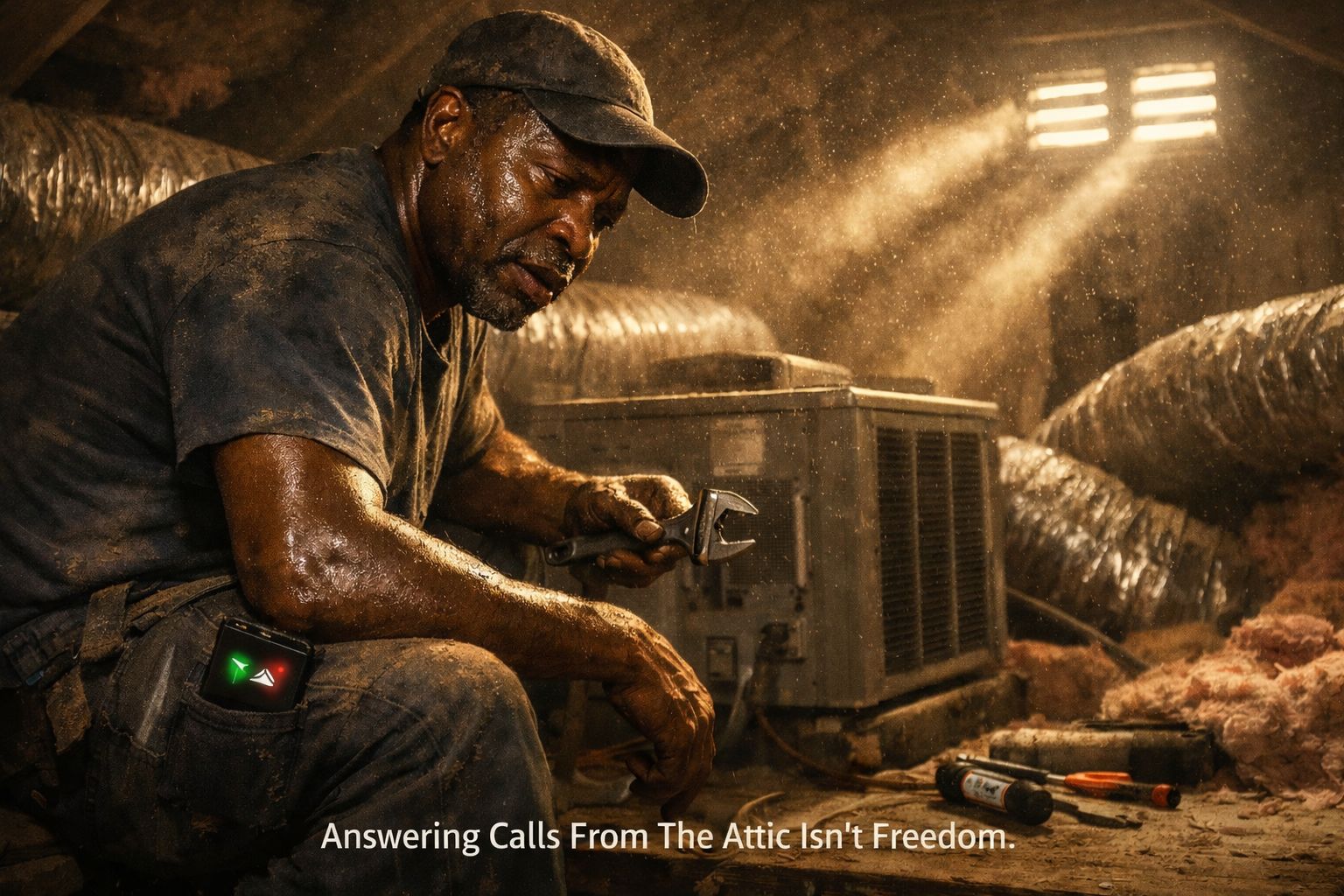 The owner answers the calls.
The owner returns the messages.
The owner schedules the installs.
The owner handles the problems.
That works when the business is small.
But as the company grows, the same behavior that built the business begins to trap it.
Every missed call becomes lost revenue.
Every delayed response becomes a job for a competitor.
And every new lead depends on the owner’s personal availability.
Eventually, the business becomes something many contractors never intended to build:
A job that owns them.
The Hidden Revenue Leak
Here’s a reality most contractors never calculate.
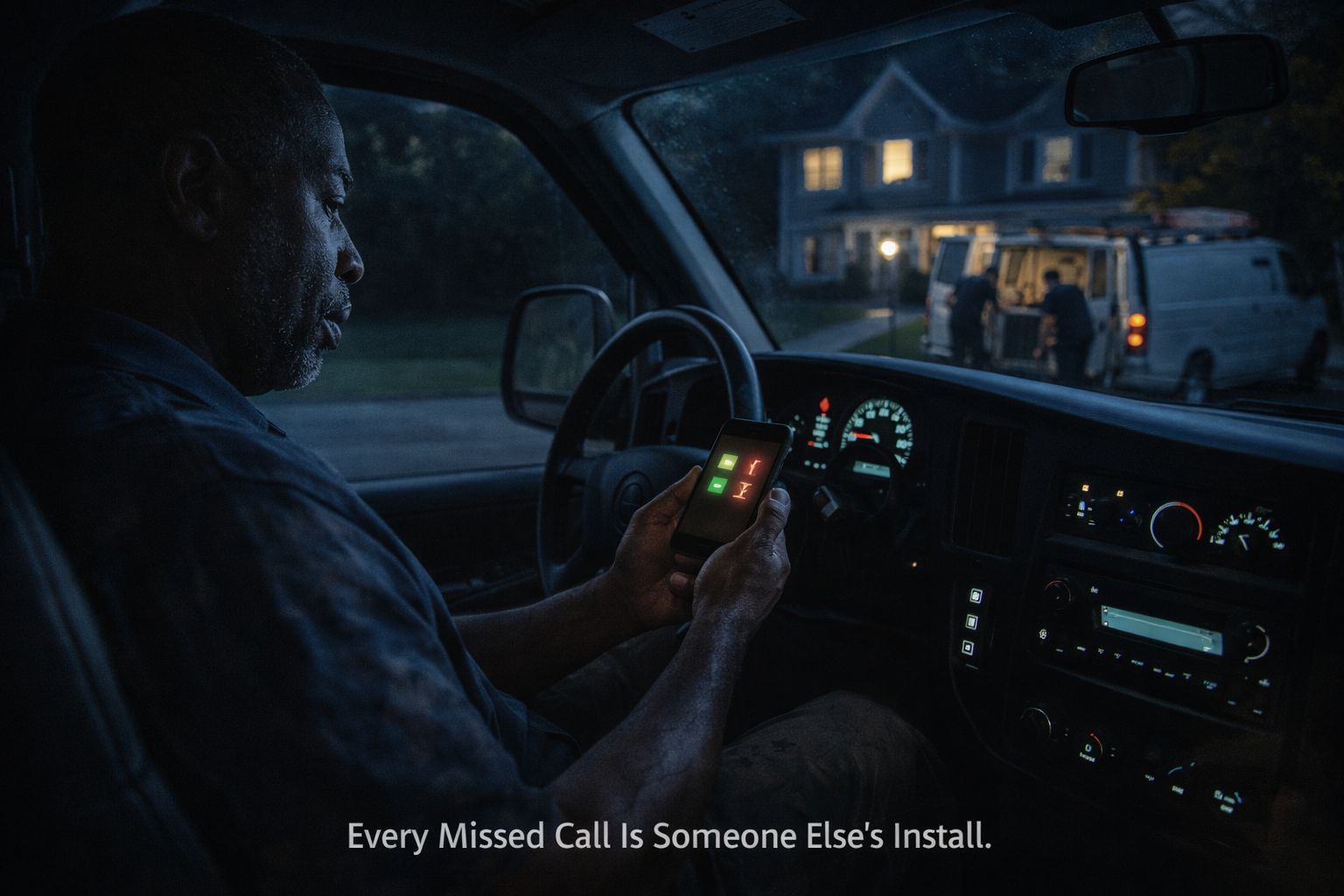 Imagine the average HVAC install is worth $9,000.
If your company misses just three install opportunities per month because calls go to voicemail or responses are delayed, the math looks like this:
$9,000 × 3 installs = $27,000 per month
Over a year, that’s $324,000 in lost revenue.
And that loss rarely happens because you lack leads. It happens because you couldn’t respond fast enough.
Homeowners don’t wait. They call the next company.
The company that answers first usually wins the job.
Why Most Marketing Advice Makes This Worse
When contractors try to solve this problem, they’re usually told to do one thing:
 Get more leads.
Run ads.
Improve SEO.
Hire a marketing agency.
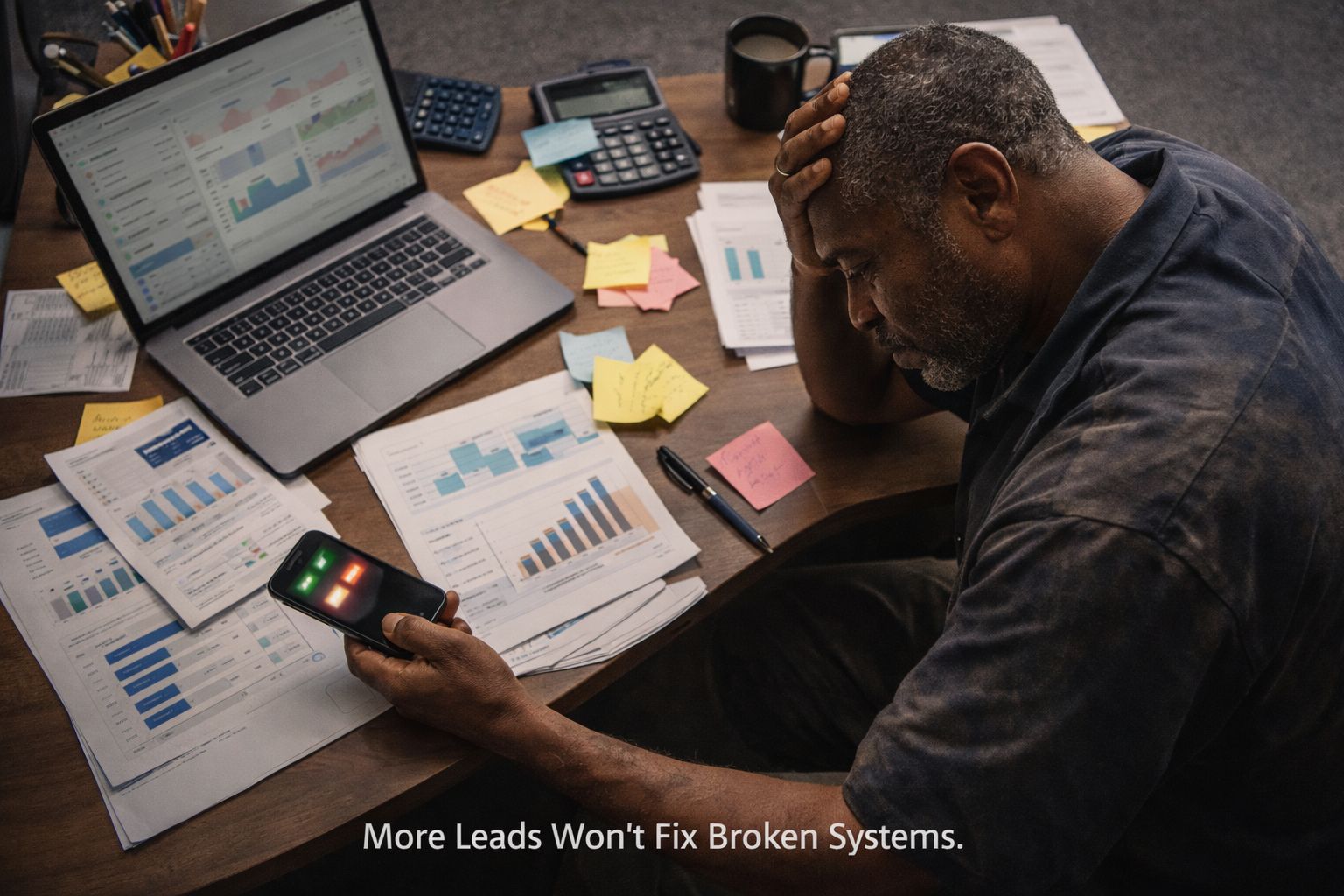
But more leads without better systems only increases the chaos.
More calls.
More interruptions.
More pressure on the owner.
The real problem isn’t demand.
The real problem is lead capture and response speed.
Most HVAC companies already generate enough opportunities. They just don’t have the systems in place to capture them consistently.
The Real Shift That Changes Everything
Contractors who escape the truck eventually make a critical shift in thinking.
They stop trying to work harder inside the business. And they start building systems that allow the business to operate without them.
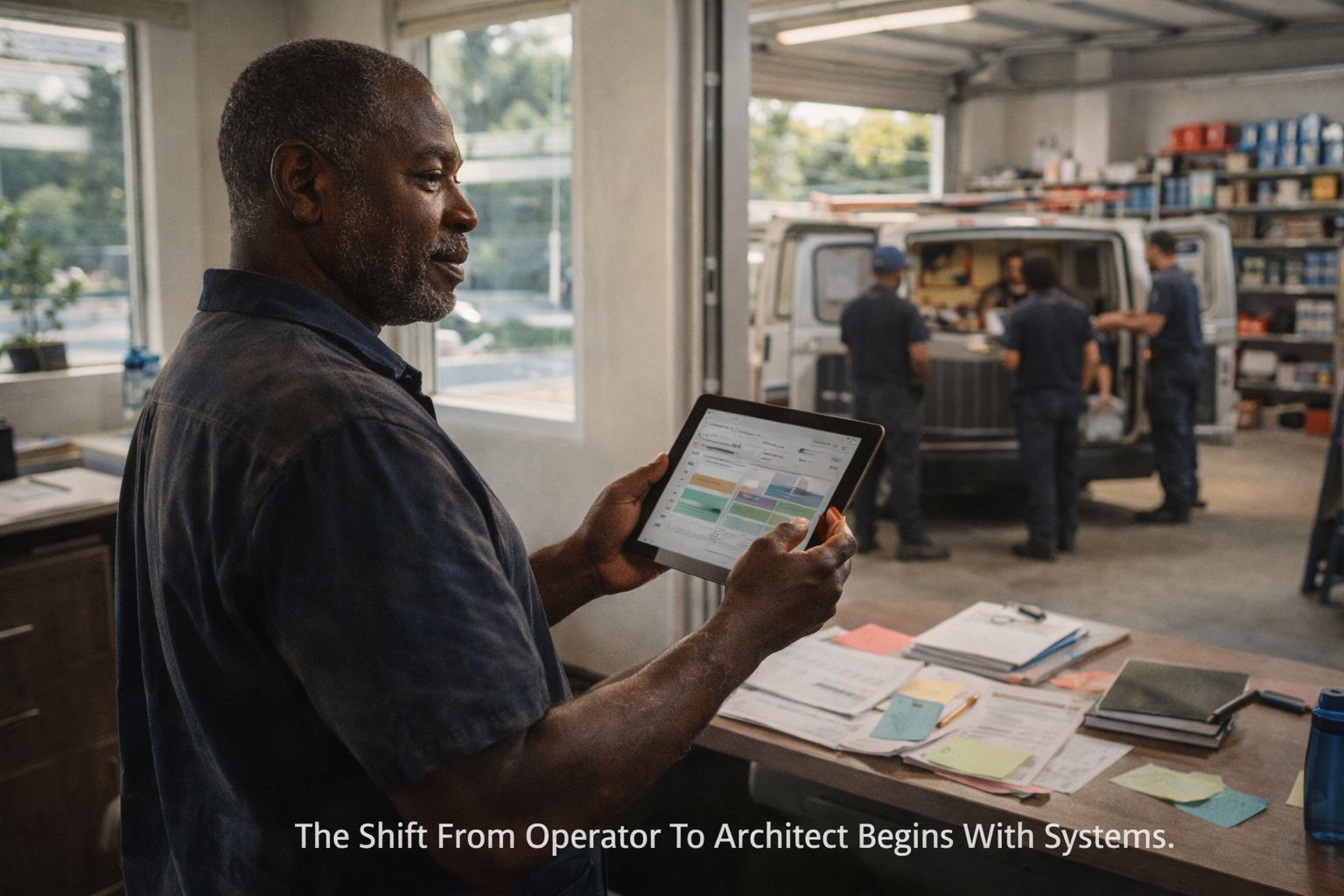 This is the moment the identity changes.
From technician…to Business Owner.
From operator…to Architect.
Architects don’t personally answer every call. They design systems that ensure the right things happen automatically.
The Concept of Lead Insurance
One of the most important systems contractors install is something we call Lead Insurance.
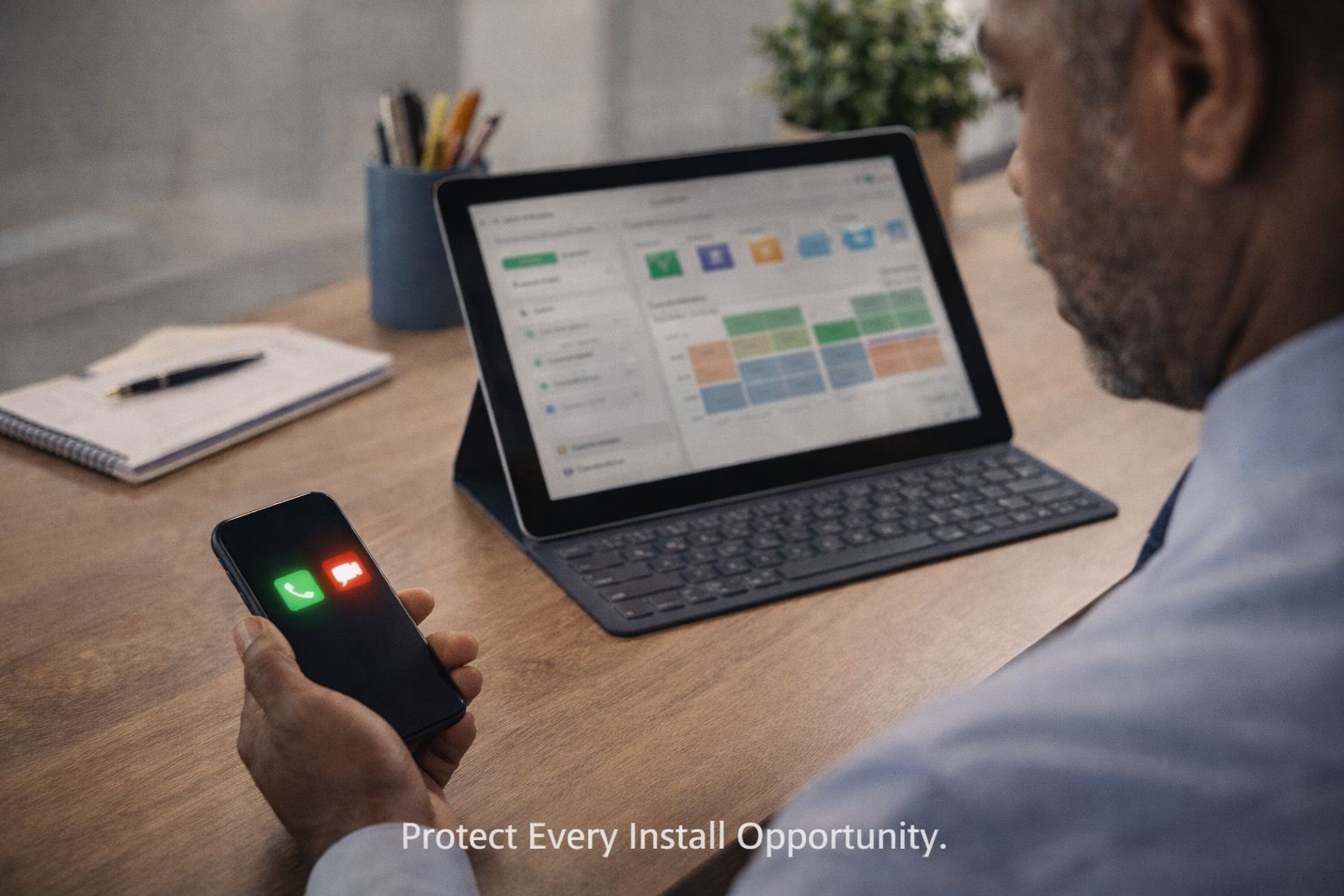 Lead Insurance ensures every opportunity is:
Captured
Responded to
Scheduled
Even when the owner is busy on a job.
Instead of relying on the owner’s availability, the business relies on infrastructure.
That means when the phone rings: The system responds.
When someone submits an inquiry: The system follows up.
When a homeowner wants an appointment: The calendar captures the opportunity.
The business no longer depends on one person being available at the exact moment a call comes in.
The Out-of-the-Truck Blueprint
Contractors who finally escape the truck usually install four operational layers inside their business.
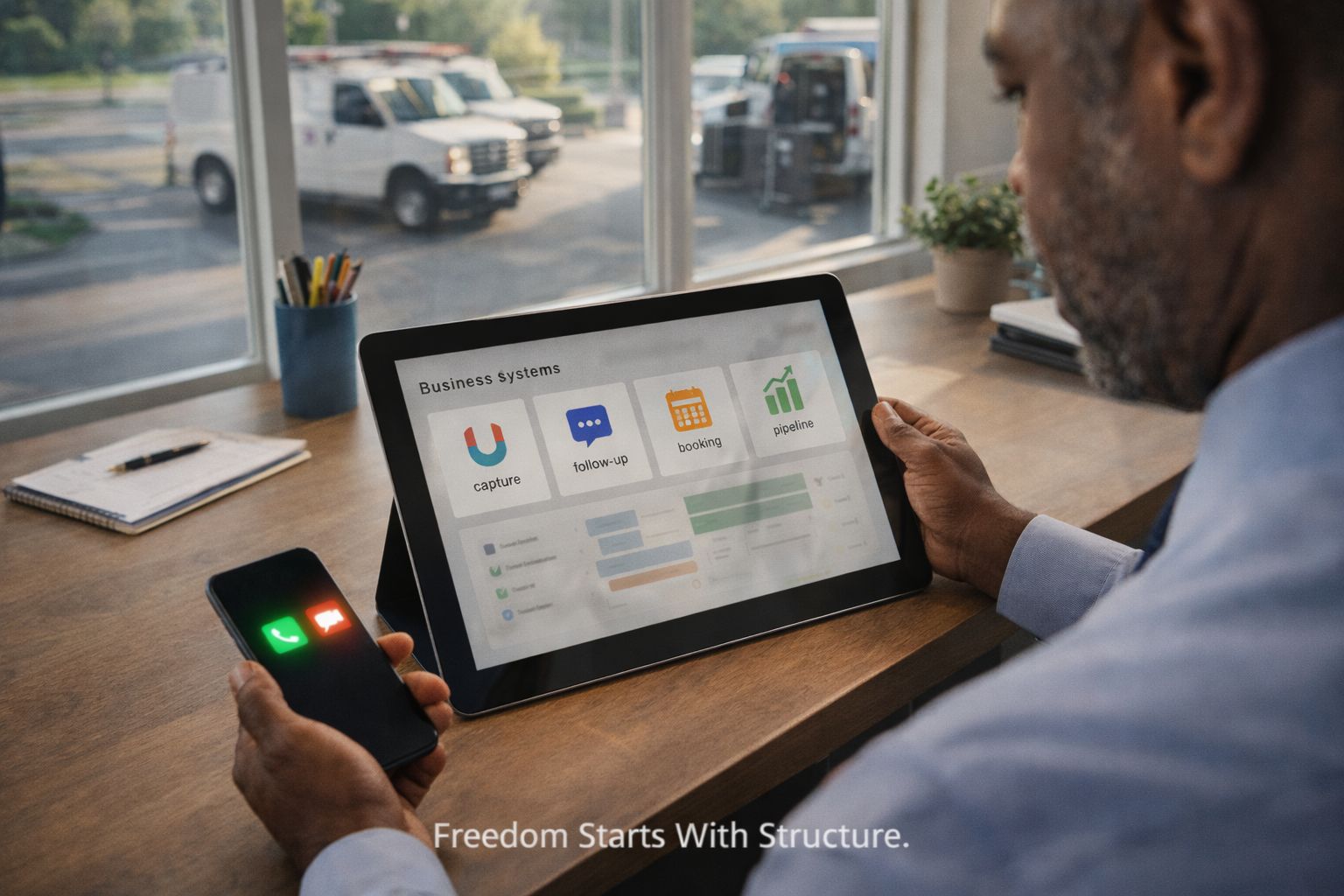 Capture Certainty
Every opportunity is captured immediately through a mobile-first marketing systems website and instant response channels.
Follow-Up Automation
Every inquiry receives structured follow-up until the opportunity is scheduled or closed.
Calendar Control
Appointments are booked predictably and reminders reduce no-shows.
Owner Detachment
The business can operate without the owner personally answering inbound calls.
At this stage, something remarkable happens.
The phone still rings.
The leads still come in.
The installs still get booked.
But the owner is no longer chained to the process.
The Moment Everything Changes
Contractors often describe a specific moment when they realize the system is working.
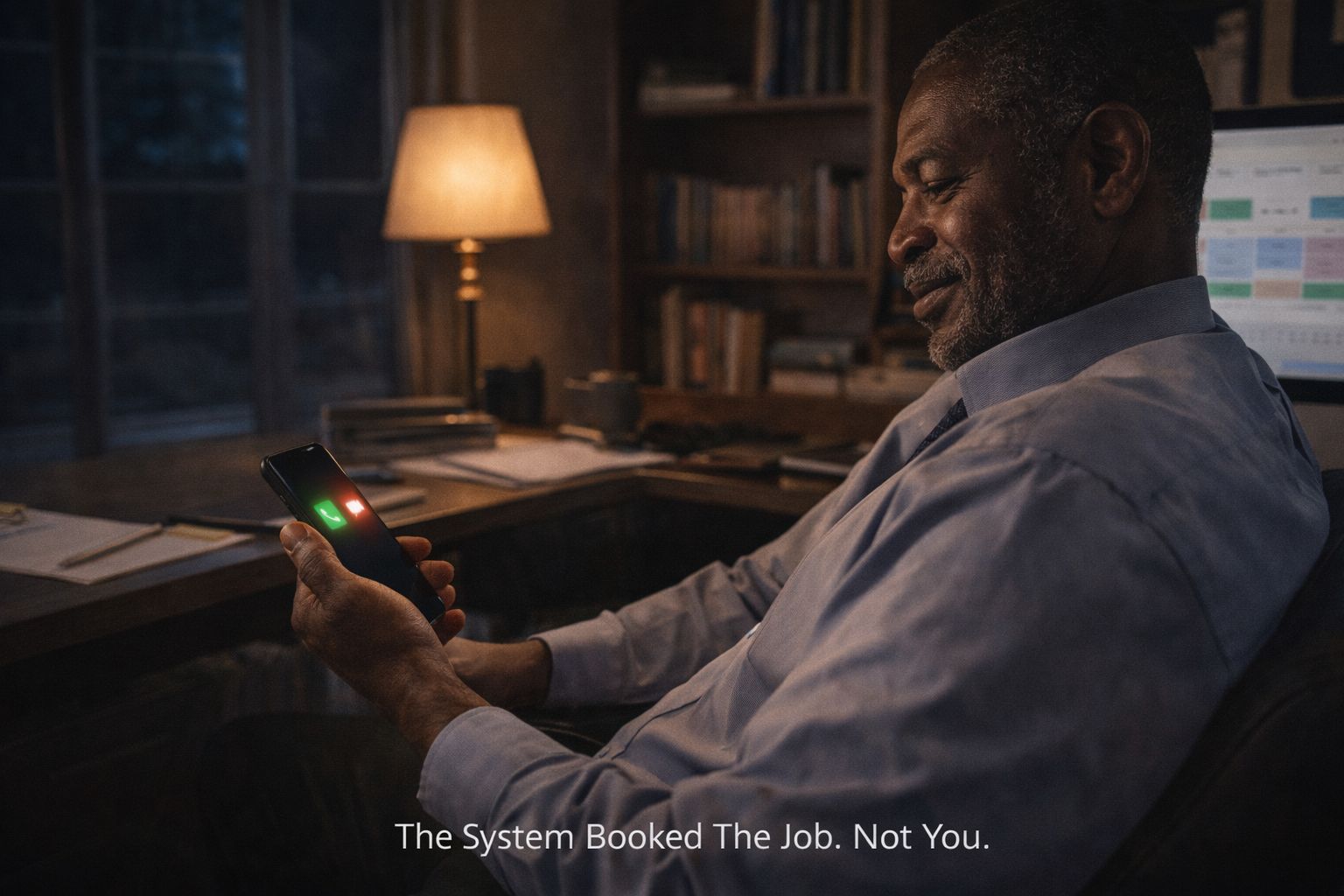 They’re standing in their office. Or sitting at home.
And a notification appears on their phone:
“New appointment scheduled.”
No phone call.
No scrambling.
No missed opportunity.
Just a system doing its job.
That’s the moment many contractors finally realize:
They’re no longer just running jobs.
They’re building a real business.
The Real Goal Was Never Just More Work
Most contractors don’t start their businesses because they want more stress.
 They start because they want a better life for their family.
More freedom.
More stability.
More control over their time.
But without systems, growth often creates the opposite.
More calls.
More chaos.
More dependence on the owner.
The businesses that eventually break this cycle are the ones that stop relying on hustle and start installing infrastructure.
The Exit Ticket From the Truck
 Escaping the truck doesn’t happen because the owner stops caring about the business.
It happens because the business finally has the systems required to operate without them.
That’s when the real transformation occurs.
The technician becomes the architect.
And the business becomes something far more valuable than a job.
It becomes an asset.
Final Thought
Most HVAC owners spend years trying to grow their way out of the truck.
The contractors who succeed usually do something different.
They install systems first.
Because a real business doesn’t run on hustle.
It runs on structure.
How do you think installing systems will help you get out of the truck?